Carnegie Investment Counsel Blog

Social Security: When Should You Claim?

Posted by Alex M. Velazquez on Sep 17, 2026, 9:15:00 AM

One of the biggest questions you’ll face as you approach retirement is when to claim Social Security. Your claiming age can make a significant difference in how much you receive. You can generally begin collecting retirement benefits at age 62, but doing so can significantly reduce your monthly benefit compared with waiting until your full retirement age (FRA), which ranges from 66 to 67 depending on your birth year. For someone whose FRA is 67, claiming at 62 can reduce your monthly retirement benefit by about 30%.

The incentives also work in the other direction. Once you reach FRA, your benefit generally increases by 8% for each year you delay claiming until age 70. That means the difference between claiming at 62 and waiting until 70 can be substantial.

Read More

Topics: Financial Planning, Retirement Planning

Roth Conversions: Looking Beyond Your Tax Bracket

Posted by Alex M. Velazquez on Aug 20, 2026, 9:00:00 AM

A Roth conversion can be a powerful retirement planning tool, but the decision is rarely as simple as asking whether tax rates will be higher or lower in the future.

With a traditional IRA or 401(k), you receive a tax benefit when you contribute. Your investments can grow tax-deferred, but withdrawals are eventually taxed as ordinary income and Required Minimum Distributions (“RMDs”) apply later in retirement. A Roth account works differently. You contribute after-tax dollars, but your investments can grow tax-free, qualified withdrawals are tax-free, and Roth IRAs do not have lifetime RMDs for the original owner.

Read More

Topics: Financial Planning, Retirement Planning

Buying a Condo in 2026: Five Often-Overlooked Factors That Could Impact Your Financial Plan

Posted by William Anderson, CSRIC® on Jul 9, 2026, 9:15:01 AM

A condominium is often seen as an ideal structure for a seasonal residence or as the next step for empty nesters who want space and location, but not the hassle of maintaining a suburban house. Condominiums were initially marketed as offering a carefree lifestyle in which maintenance and upkeep were overseen by professional management. The predictability of owner costs also made condominium ownership attractive to retirees with fixed income streams.

However, purchasing a condominium requires significantly more due diligence than buying a single-family home. While you are acquiring ownership of your individual unit, you are also becoming a member of a homeowner's association (HOA) that shares financial responsibilities, maintenance obligations, and legal liabilities. Understanding the nuances of reserve studies, insurance structures, association finances, and ownership restrictions can mean the difference between a sound investment and a financial nightmare.

Before purchasing a condominium in 2026, it is important to understand several often-overlooked factors that could affect your long-term financial plan.

Read More

Topics: Financial Planning, Wealth Management, Retirement Planning

Inflation in Retirement

Posted by Alex M. Velazquez on Jun 18, 2026, 9:00:00 AM

Inflation was largely an afterthought for many years. The dollar experienced an average inflation rate of 2.1% per year between 2000 and 2020. During that period, retirees rarely had to worry about inflation eroding their purchasing power. That changed during the COVID-era inflation surge, when inflation averaged 4.7% in 2021 and 8.0% in 2022, according to the U.S. Bureau of Labor Statistics.

While inflation has moderated from its recent highs, the experience served as an important reminder that rising prices can present a significant risk for retirees. Unlike those still in the workforce, retirees generally cannot rely on salary increases to offset higher costs. Instead, retirement income and investment portfolios must support spending needs over what may be a retirement lasting 20, 30, or even 40 years.

Read More

Topics: Financial Planning, Economy, Retirement Planning

Should You Convert an Old 401(k) to an IRA?

Posted by William Anderson, CSRIC® on May 28, 2026, 10:00:00 AM

A 401(k) account at a former employer is like a financial storage unit: important assets are sitting there, but they are out of sight, hard to coordinate, and may be disconnected from the rest of your retirement plan. The question for many investors is whether that old account still belongs there, or whether it should be rolled into an IRA as part of a more coordinated retirement strategy. A rollover to an IRA can turn that dormant account into a more flexible, better-managed piece of the overall portfolio.

Read More

Topics: Financial Planning, Wealth Management, Retirement Planning

Evaluating Housing Decisions in Retirement

Posted by Alex M. Velazquez on May 21, 2026, 9:00:03 AM

For many retirees, deciding whether to downsize is an important part of retirement planning. In the past, selling a larger family home and moving into something smaller often seemed straightforward. Today, however, higher home prices and mortgage rates have made the decision far more complex.

In some cases, staying in your current home may make better financial sense. In others, relocating can improve cash flow, simplify daily life, and provide greater long-term flexibility. The right decision depends on balancing both financial and personal considerations.

Read More

Topics: Financial Planning, Retirement Planning, Taxes

Seniors: Should You Add a Trusted Contact?

Posted by Carnegie Investment Counsel on Mar 21, 2023, 2:00:00 PM

No one likes to think about falling victim to a scam or suffering a medical emergency, but the sobering truth is that these situations do occur. If this type of trouble arises, you may need someone to advocate for you or serve as your liaison. Having a trusted contact is extremely important when it pertains to the management and protection of your finances. 

Here’s how to begin the process of adding a trusted contact to your financial advisor account to prevent any disconnect.

Read More

Topics: Financial Planning, Investment Management, Retirement Planning

Beneficiary Designations: Who Will Get Your Money?

Posted by Carnegie Investment Counsel on Sep 29, 2022, 2:00:00 PM

When you think about your company retirement plan account, do you know what will happen to the money in the event of your passing? It’s not a pleasant topic, but it’s nevertheless important that you have a plan in place to ensure your legacy is looked after the way you want.

Enrolling in your retirement plan prompts you to name a beneficiary in the event of your death. Simply put, you designate someone to receive your account assets after your passing. Does your beneficiary plan currently reflect your wishes? Many people tend to overlook this detail, but it’s imperative that you keep this information up to date. Here’s how your account passes depending on your relationship status.

Read More

Topics: Retirement Planning

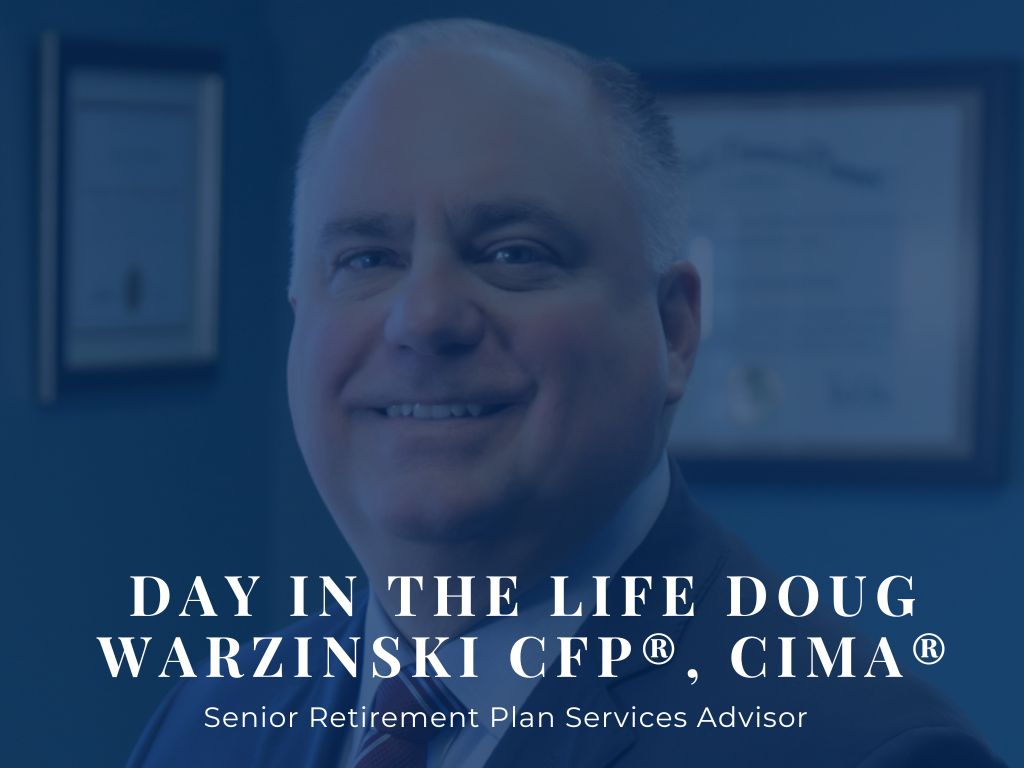
Day in the Life Doug Warzinski CFP®, CIMA®, Senior Retirement Plan Services Advisor

Posted by Carnegie Investment Counsel on Sep 22, 2022, 2:00:00 PM

The retirement arena of the financial world can be tricky to navigate, for both employers and individuals. Retirement looks different for everybody, and plans provided by business owners come with plenty of fine-print details and considerations. It can seem daunting, to be sure, but retirement planning poses some of the most important decisions anyone can make. Doug Warzinski, CFP®, CIMA® is here to make it all connect seamlessly and responsibly as a Senior Retirement Advisor. 

Here’s more about Doug Warzinski, his background and what it’s like to work with Doug on retirement plan services.

With 20 years of expertise in retirement plan design and wealth management services, Doug Warzinski helps corporate clients and retirement plan participants address their various financial needs. He’s worked at Carnegie Investment Counsel since 2021. Doug earned his bachelor’s degree in business administration with a marketing major from Ohio University, and he later attained the Certified Investment Management Analyst® designation and CERTIFIED FINANCIAL PLANNER™ designation. 

When he’s not at work, Doug enjoys spending time with his wife and their two daughters, coaching the girls’ soccer teams and caring for the family Bernedoodle, Penny.

Read More

Topics: Retirement Planning

Federal Employee Retirement Basics

Posted by Carnegie Investment Counsel on May 17, 2022, 1:30:00 PM

As retirement plan advisors, we understand that as pension plans in the private sector become less common, the retirement pension plan for federal employees remains an attractive retirement option. If you’re a federal employee or considering becoming a federal employee, here are the basic elements of the Federal Employee Retirement System.

Read More

Topics: Retirement Planning

image-4

Looking to hire a Financial Advisor?

Enclosed in our free eBook are four questions we recommend you ask any prospective group you review.

  • There are no suggestions because the search field is empty.

Recent Articles

Subscribe here for monthly blog updates!