Over the last few weeks, investors reading the news headlines, tuning into CNBC or checking their account balances, have taken note of an uptick in volatility. It’s hard not to pay attention when markets turn choppy. Some begin to wonder if they should take action.
But market ups and downs—what investors call volatility—aren’t a sign that something is wrong. They’re a normal part of how investing works. We all want the long-term growth that comes from owning stocks. What we don't want are the uncomfortable stretches that come with it. Unfortunately, you can't separate the two. The superior long-term returns equities provide relative to other asset classes are available precisely because markets are uncertain and prices move around.
What Is Volatility, Really?
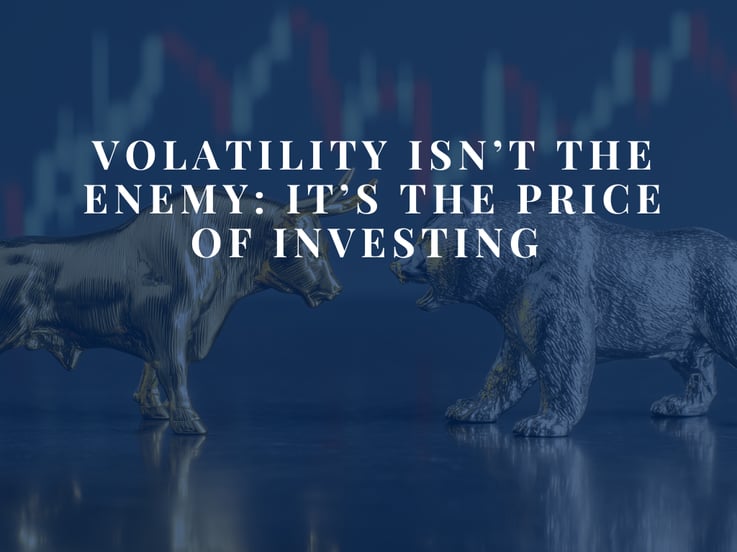
Volatility simply means prices move. The prices of investment assets (stocks, bonds, and funds) change each day as new information becomes available. This information includes economic data, company earnings, interest rate decisions, and global events. Markets constantly adjust as investors assess how the future might look and respond accordingly.
If prices never moved, investing would be easy—but returns would be much lower. The reason investors are rewarded over time is because there are periods when staying invested feels difficult. An investor must expose themselves to the possibility of losses in the short term to capture the potential long-term gains.
Why Market Swings Feel So Uncomfortable
Even though volatility is normal, it can challenge an investor’s confidence and feel uncomfortable. Watching your portfolio drop—even temporarily—can trigger fear or anxiety. That emotional response is completely human.
The trouble is that emotional decisions often hurt long‑term results. Selling during a downturn, waiting too long to reinvest, or jumping from strategy to strategy can all reduce returns over time. Many investors don’t lose money because markets fall—they lose money because they become reactionary and stray from their investment strategy.
Market Drops Can Create Opportunity
Here’s the part that often gets overlooked: when markets fall, future potential returns often improve.
Lower prices can mean:
- Better long‑term entry points
- Higher income yields
- More chances to rebalance or invest new money
Some of the best long‑term investment results begin during uncomfortable periods. The challenge is staying disciplined when it feels hardest to do so.
Time Is Your Greatest Advantage
Short-term market fluctuations matter much less when your money is invested for long-term goals like retirement, education, or building wealth over decades.
History has shown that while markets experience frequent downturns, they have also tended to reward patience over time. Investors who stay invested through ups and downs have generally been better off than those who try to time exits and re-entries.
Instead of focusing on daily or monthly swings, it helps to ask:
- Has my long‑term goal changed?
- Has my financial plan changed?
If the answer is no, reacting to short‑term noise may not be necessary—or helpful.
Volatility Is Not the Same Thing as Risk
It’s important to separate movement from danger.
True investment risk isn’t seeing your account fluctuate. It’s:
- Being forced to sell at a bad time
- Taking more risk than you can tolerate
- Not reaching your long‑term goals
In most cases, temporary declines only become permanent losses when fear pushes you into a decision that doesn’t align with your plan.
Building Confidence in Uncertain Markets
A thoughtful investment approach helps weather volatility:
- Clear goals provide perspective when markets move fast
- Maintaining some liquidity avoids forced selling
- Diversification reduces reliance on any single investment
- Rebalancing brings discipline during swings
These tools don’t eliminate volatility—but they help you live with it.
The Bottom Line
Volatility isn’t a flaw in the system. It’s the cost of participating in markets that grow over time. Every long‑term investor pays this price in the form of temporary ups and downs.
The investors who tend to be most successful over time aren't the ones who can predict every twist and turn in the market. They're the ones who accept that volatility is inevitable and refuse to let it dictate their decisions. For patient investors, market swings aren’t a reason to panic. They’re part of the journey—and often the source of opportunity along the way.
If recent market volatility has raised questions about your investment strategy, reach out to your Carnegie advisor to make sure your investment strategy remains aligned with your goals.
For informational purposes only. Data and other market and economic information referenced are from sources believed to be reliable, and opinions are subject to change. The information is not intended to provide specific advice or recommendations, and all investments involve risks, including the loss of principal.
Carnegie Investment Counsel (“Carnegie”) is a registered investment adviser with the Securities and Exchange Commission. Registration as an investment adviser does not imply a certain level of skill or training. For a more detailed discussion about Carnegie’s investment advisory services and fees, please view our Form ADV and Form CRS by visiting: https://adviserinfo.sec.gov/firm/summary/150488.
You may also visit our website at: https://www.carnegieinvest.com.