
53.37% of nonprofits agree that it’s vital to acquire multiple major gifts. Yet, 58.87% of organizations lack a major gift strategy, and 75.32% attribute this to a lack of investment on their part.
This staggering contradiction underscores the need to emphasize major gift fundraising. While technology-driven engagement tactics and personalized outreach can grab prospects’ attention, achieving success with major donors is about more than simply asking for funds. It’s about strategically positioning your organization as a trustworthy and effective partner by clearly demonstrating the measurable return on investment (ROI) their gifts generate.
Impact data turns your major gift fundraising appeals from transactional requests into proposals for strategic, long-term partnerships. With an effective impact reporting process in place, your nonprofit can establish deeper trust with donors and cultivate stronger relationships that lead to major gifts.
Let’s unpack the role of impact reporting in cultivating major gifts.
What Impact Data Do Major Donors Need to See?
Vague appeals about “doing good” are no longer sufficient to secure a significant commitment; donors demand transparency. A high-quality impact report provides the verifiable evidence needed to build confidence with major donors and secure their continued support.
This “verifiable evidence” varies depending on the metrics your nonprofit tracks and the data most relevant to your report. However, there are two primary types of impact data your prospective major donors will look for:
- Outputs: The activities performed by your organization, such as the number of meals served in the community
- Outcomes: The long-term quantitative and qualitative results of your organization’s activities
- Quantitative data is numerical evidence, such as a 20% decrease in food insecurity across the community. These "hard numbers" build credibility and back up claims.
- Qualitative data is descriptive information, such as testimonials from beneficiaries. This data provides emotional context and a fuller picture of the intangible results.
Major donors are primarily interested in the outcomes, as this data represents the true return on their investment. The best way to emphasize outcomes in your impact report is by acknowledging your nonprofit’s social impact, which includes all the effects (positive, negative, direct, indirect, intentional, and unintentional) you’ve had on the community.
Within outcomes, sharing a mix of quantitative and qualitative data will help you make the most compelling case.
How To Use Your Impact Report For Major Donor Cultivation
Your impact report can support several of the phases in your major gift cycle. Let’s talk about how.
Cultivation
Cultivation is the pinnacle of the major gift cycle, as this is the turning point during which your impact data becomes more constituent-facing. During this phase, you’ll share relevant impact data with potential major donors, garnering their interest in your work.
Cultivation practices often involve personalizing your outreach to recognize your prospects as individuals. Here are a few ways to use your impact data to customize prospect communications:
- Tailor preliminary discussions to prospects’ interests. For example, if a prospective donor has expressed interest in education, relevant data from a youth literacy program’s student success may spark their engagement.
- Illustrate potential impact. To inspire future giving, provide specific examples of how prospects’ contributions could drive results. Incorporate compelling beneficiary stories (with consent) and projections of future potential impact based on past performance.
- Educate prospects about program evaluations. Involve potential major donors in discussions about program goals and how your organization aims to achieve its mission, making them feel like active partners even before they make a gift.
Over time, your impact report will feel less like a list of numbers and more like a story of what you and your major donors can accomplish together.
Solicitation
Solicitation is the process of formally requesting a contribution from prospective major donors. Impact data enables you to create highly specific appeals that demonstrate the direct, measurable change a particular donation amount will fund.
Stewardship
Finally, the stewardship phase is an ongoing effort to show your appreciation for major donors and share the impact of their contributions. Here, impact reporting serves as the ultimate "thank you" by directly linking major donors’ contributions to concrete achievements. It can also reignite a lapsed donor’s passion for your cause and help you earn a second chance at their support.
The Long-Term Value of Impact Reporting
Donor retention rates increase with repeated giving, highlighting the critical nature of ongoing stewardship even after a donor makes a major gift. Impact reporting is one of the most powerful stewardship tools because it constantly reinforces the return on a donor's investment, rebuilding trust and re-earning their support.
To ensure consistency in your major donor stewardship, establish a strategic foundation for your impact reporting practices. According to UpMetrics, an Impact Framework is a strategic resource that defines how you’ll measure, manage, and communicate your organization’s impact. It standardizes the impact measurement process, making it easier to share your organization’s work with all stakeholders, including major donors.
Here’s how you can create (and use) an Impact Framework:
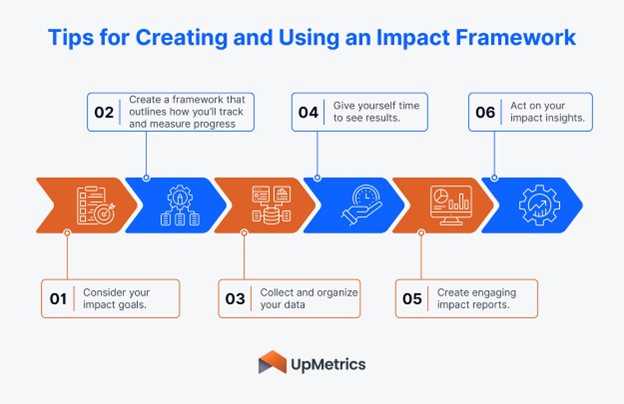
- Consider your impact goals. Decide what you hope to measure and why.
- Create a framework that outlines how you’ll track and measure progress. Look for an Impact Framework that helps you measure the most important metrics, or create your own.
- Collect and organize your data. Think about where your data lives, and clean your data to get it ready to use.
- Give yourself time to see results. Track your progress and monitor trends and patterns over time.
- Create engaging impact reports. Turn your data into an eye-catching report with interactive elements and visually appealing graphics.
- Act on your impact insights. Incorporate insights from your data into your decision-making processes to further your organization’s positive impact!
An Impact Framework empowers you to constantly measure and improve your nonprofit’s social impact, preparing you to follow up with major donors at all times.
True financial resilience is built not only on securing large gifts but on the transparent measurement that earns them. When you share the tangible outcomes that your nonprofit has accomplished, you remind major donors that they are a vital part of your story. Review your current impact measurement practices and identify new ways to integrate data into your major gift cultivation strategies.